Persian food: a guide to the classic dishes
The stews, the rice and the spices that carry the Iranian kitchen. What Persian food is, how it tastes and which dishes to start with.
In this article
Persian food, also called Iranian food, is one of the oldest kitchens in the world. It is not kabab first, although kabab exists. In an Iranian home the everyday food is stews that simmer for hours and rice cooked with almost religious care. The flavours are sour, herby and mild. Chilli is almost never used.
This guide is a map. Each dish has its own article where we go deeper.
Persian food at a glance
- The base: khoresh (stew) and polo or chelo (rice)
- Flavours: sour, herby, sweet and sour together, rarely hot
- Typical ingredients: saffron, dried lime, pomegranate, walnuts, herbs, barberries
- On the side: yoghurt, Shirazi salad, torshi (pickled vegetables)
- What everyone fights over: tahdig, the crisp rice from the bottom of the pot
The stews: khoresh
Khoresh means stew, and this is where the Iranian kitchen shows what it can do. The base is meat or chicken simmered for a long time with one ingredient that gives the stew its character.
- Ghormeh sabzi. The herb stew. Fried herbs, lamb, kidney beans and dried lime. The dish most Iranians mean when they say home.
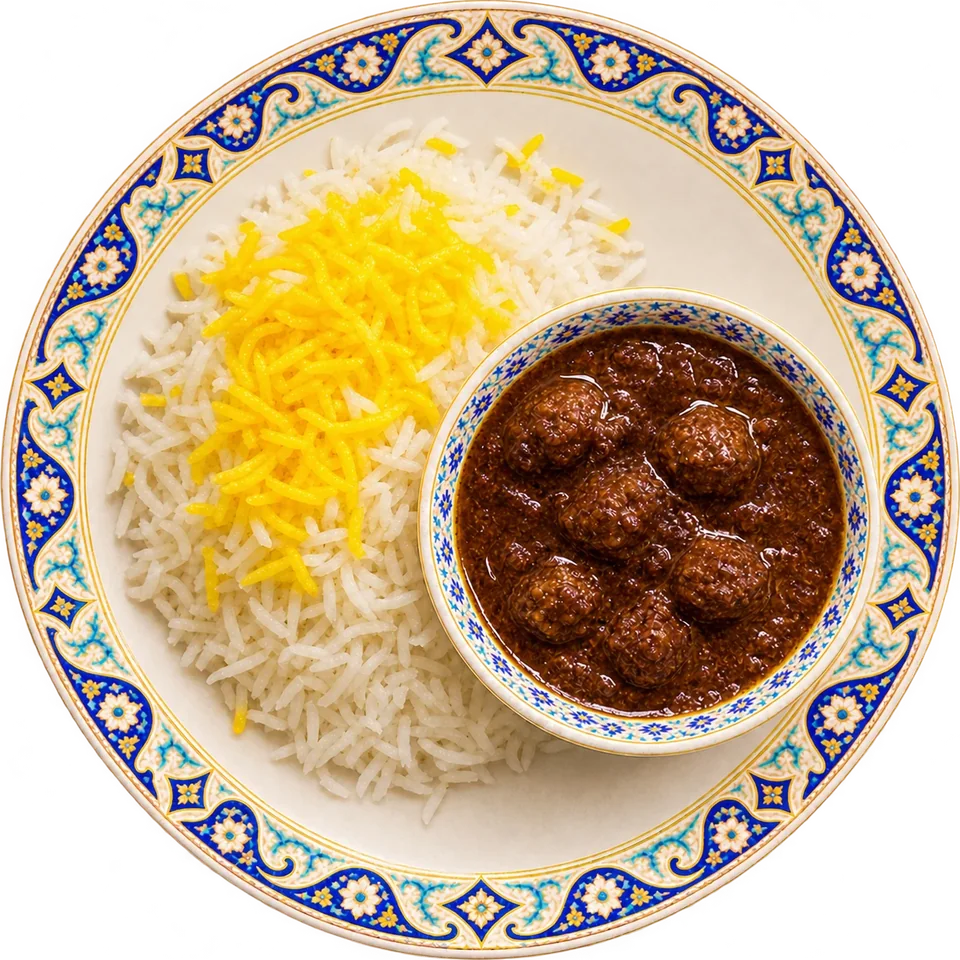
- Fesenjan. Walnuts and pomegranate molasses cooked for hours until the stew turns dark and glossy. Sweet and sour at once.
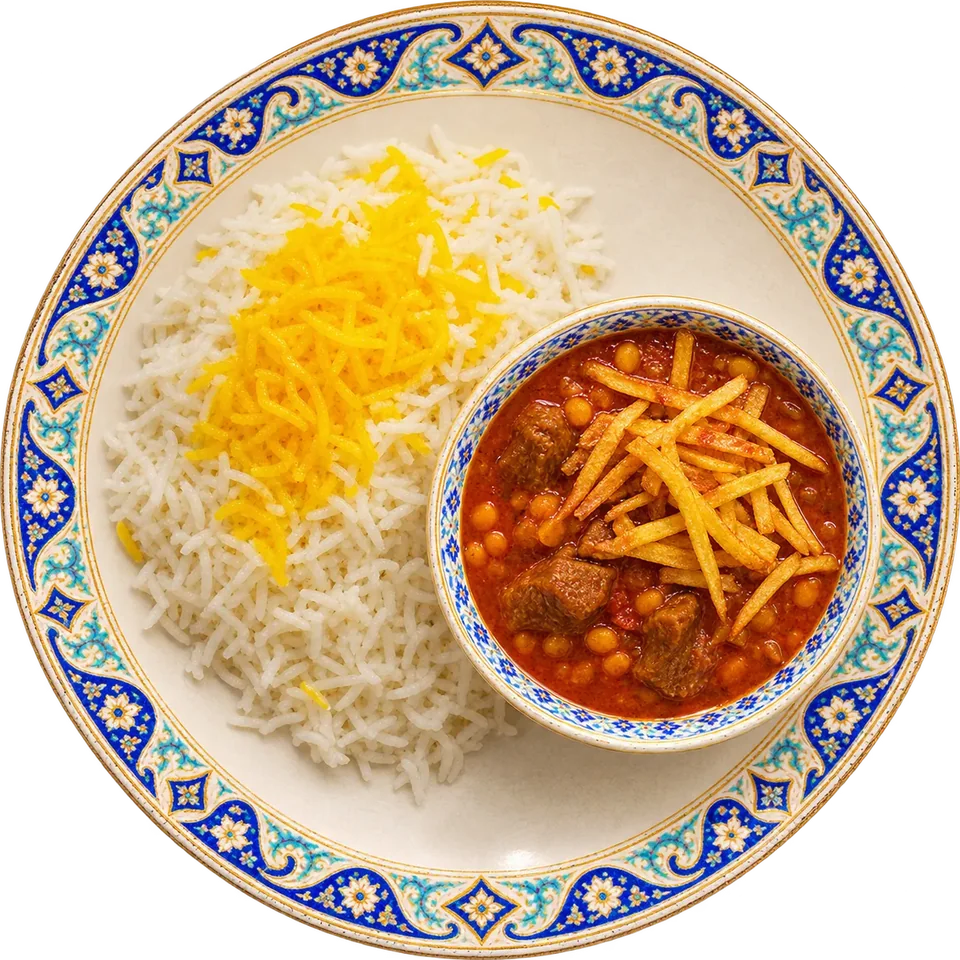
- Gheymeh. Lamb and yellow split peas in tomato and dried lime, topped with thin fried potatoes. Mild, rich and loved by children.
The rice: chelo and polo
Iranians cook rice in a way that takes time to learn. The rice is soaked, parboiled, drained and then steamed slowly with a cloth under the lid. The result is long, separate grains that never stick.
- Chelo is white rice, often with saffron on top, served with the stews.
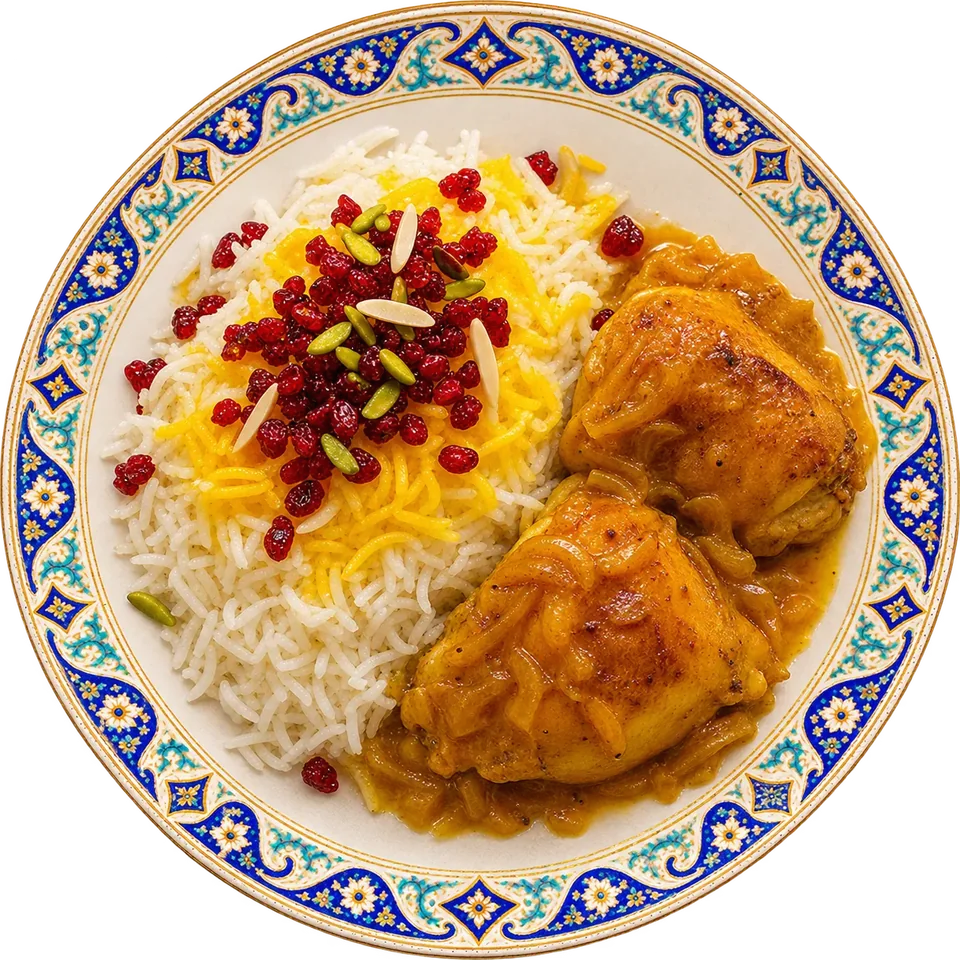
- Polo is rice cooked together with something else. Zereshk polo ba morgh, saffron chicken with barberry rice, is a dish for celebrations that also belongs on the everyday table.
- Tahdig is the golden, crunchy crust from the bottom of the pot. Every family makes it and it is always gone first.
The spices and the flavours
Persian food is sparing with spices but generous with flavour. Turmeric is in almost everything. Cinnamon and cardamom appear in both stew and rice. Dried lime gives sourness, pomegranate gives sweet-and-sour, and fresh herbs give greenness.
And then saffron, which gives the rice its colour and scent. How it is used, and why it is never sprinkled dry over the food, is explained in saffron in Persian cooking.
Persian food in Stockholm
Stockholm has Persian restaurants with grills and kabab, and Iranian shops where you find dried lime, barberries and Iranian rice. What is harder to find is the food of the home: the slow stews that rarely appear on restaurant menus because they take too long.
That is why Douri exists. We cook these dishes the way an Iranian home does, slowly, and deliver them as lunch boxes in Stockholm on Sundays. All the meat is halal. How it works, and why stews suit a lunch box so well, is in our guide to ready-made lunch boxes in Stockholm. You can also see every dish we cook.
Frequently asked questions
Is Persian food spicy?
No. Persian food almost never uses chilli. The flavour comes from herbs, saffron, dried lime, pomegranate and slow cooking.
What is the difference between Persian and Iranian food?
None. Persian food and Iranian food mean the same thing; Persian is the older name.
Which Persian dish should I try first?
Ghormeh sabzi, the herb stew, is the dish most Iranians call the taste of home. If you like sweet and sour, fesenjan is a good first choice.
What do you eat with Persian stews?
Saffron rice, ideally with a piece of tahdig, the crisp crust from the bottom of the pot. Beside it yoghurt, salad or pickled vegetables.
Where can I eat Persian home cooking in Stockholm?
Persian restaurants in Stockholm mostly serve grilled kabab. Douri delivers the home dishes, the slow stews and rice, as lunch boxes on Sundays. All meat is halal.